
Union Picnic Raffle Gift
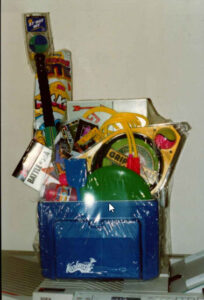
The client, a subcontractor was asked to provide a raffle gift for a union picinic. We created this cooler filled with outdoor toys for lots of family fun.
Why are raffle prizes such an effective tool at events and in conference booths, and how do you make them work hardest for your brand?
A raffle does something that almost no other booth or event tactic can replicate: it gives people a reason to come back. A giveaway hands something to everyone who stops by and sends them on their way. A raffle creates an ongoing relationship between your brand and the attendee that lasts for the duration of the event. They drop their card, they think about you every time they pass your booth, and they return for the drawing. That repeated exposure and anticipation is genuinely valuable -- and it costs you nothing beyond the prize itself.
The prize, however, matters enormously. A raffle prize that generates real excitement before the drawing has been announced creates a buzz that spreads organically through the event floor. Attendees tell each other. They stop colleagues and say you should go enter the raffle at booth twelve. That word-of-mouth is impossible to manufacture with a standard giveaway and it happens naturally when the prize is something people genuinely want.
The best raffle prizes share a few common characteristics: they're visibly desirable, meaning someone across the room can understand their appeal immediately; they're relevant to the audience, so winning feels personal rather than random; and they photograph well, because in an era where everything ends up on LinkedIn or Instagram, a great prize photo extends your event presence well beyond the room. Tech items, premium experiences, high-end branded merchandise, and curated gift sets all tend to perform well against these criteria.
Presentation matters too. A prize displayed prominently in the booth -- well lit, attractively staged, clearly labeled -- does active marketing work throughout the event. It draws eyes, starts conversations, and gives your team a natural opening line with every passerby.
What are the best types of products to donate or offer as raffle prizes, and how do you match the prize to the occasion?
The donated prize and the self-sponsored prize require slightly different thinking, but both benefit from the same underlying principle: the prize should feel like it was chosen for the people in the room, not simply for the budget that was available.
For donated prizes at fundraising events and galas, the most effective contributions tend to be experiences, premium products, or items with a clear aspirational quality. Luxury branded merchandise, spa and wellness packages, tech products with broad appeal, fine food and wine collections, and travel-adjacent items all perform consistently well in live auction and raffle formats. As the donor, your brand appears in the program, in the announcer's remarks, and often in event photography -- which means a well-chosen donated prize generates meaningful visibility at a fraction of the cost of direct sponsorship.
For conference booth raffles, the calculus shifts toward relevance and portability. Attendees are traveling, which means a prize that is large, fragile, or difficult to transport home immediately becomes a logistical problem rather than a delight. Compact tech items, premium gift cards, high-quality branded merchandise that packs flat, and subscription-based prizes -- software, services, memberships -- all sidestep the portability problem elegantly. The winner can collect the prize and get it home without drama.
For in-booth prizes specifically, consider whether the prize can be tiered. A grand prize that generates the most excitement can be supported by smaller secondary prizes that increase the odds of winning and keep more people engaged throughout the day. Someone who might not enter for a single high-stakes drawing will often participate when there are multiple opportunities to win something genuinely appealing.
The donated prize context also opens up the opportunity for co-branding -- pairing your product with a complementary item from another sponsor to create a gift basket or package that is worth more than the sum of its parts and gives both brands visibility in a single presentation.
What legal considerations do I need to be aware of before running a raffle or prize drawing at a US event or EU conference?
This question deserves serious attention, because the gap between what most people assume is a simple raffle and what the law actually requires can be surprisingly wide -- and the consequences of getting it wrong range from embarrassing to genuinely costly. The rules vary significantly depending on where your event is held and who your audience is, so understanding the basics before you commit to a format is essential.
In the United States, raffle and prize drawing regulations are governed at the state level, which means there is no single national standard and the rules can differ dramatically from one state to the next. The critical legal distinction is between a sweepstakes, a contest, and a raffle. A true raffle -- where participants pay for a chance to win -- is legally classified as gambling in most US states and is typically only permitted when conducted by a registered nonprofit organization for charitable purposes. For-profit companies running paid raffles at commercial events are on legally shaky ground in most jurisdictions.
The good news is that sweepstakes -- where entry is free and no purchase is required -- are legal for commercial companies across the US, provided they follow certain rules. The most important of these is the no purchase necessary requirement: if there is any mechanism by which someone can enter without buying something or providing compensation, the sweepstakes is generally permissible. At a conference booth, this typically means accepting business cards or entry forms from anyone who stops by, regardless of whether they engage with your sales pitch. Requiring a purchase, a demo sit-through, or any other form of consideration as a condition of entry can push the activity back toward the legal definition of gambling.
Additional US considerations worth flagging: prize values above certain thresholds may trigger federal tax reporting requirements -- winners of prizes valued at $600 or more may receive a 1099 form, and prizes above $5,000 are subject to federal withholding. Alcohol, firearms, and certain other product categories face additional restrictions as prizes in specific states. And some states -- notably New York and Florida -- have registration and bonding requirements for sweepstakes above certain prize value thresholds, even when properly structured.
In the European Union, the regulatory landscape is equally complex but organized around different principles. EU member states each maintain their own gambling and promotional competition laws, which means a prize drawing that is perfectly legal at a conference in Germany may face different requirements at an equivalent event in France, Italy, or Spain. Some countries require prior registration or notification of promotional competitions with a government authority. Others impose specific rules around the odds of winning, the method of prize selection, and the public announcement of results.
The GDPR layer adds another dimension that is easy to overlook. Collecting business cards or contact information as raffle entries constitutes personal data collection under GDPR, which means you need a lawful basis for processing that data, a clear privacy notice explaining how it will be used, and a process for honoring data subject rights including the right to have information deleted. Using raffle entry data for marketing follow-up without explicit consent is a GDPR compliance issue, not just a best practice question.
Alcohol and tobacco products face strict restrictions as prizes across most EU jurisdictions, and financial products or services may trigger additional regulatory requirements depending on the country.
The consistent advice across both the US and EU contexts is the same: before committing to a raffle or prize drawing format at any event, involve your legal counsel early and know the specific rules of the jurisdiction where the event is taking place. What works perfectly at your home office location may require meaningful adjustments the moment you cross a state or national border. We always recommend clients confirm their specific format with qualified legal advice before going live -- and we're happy to help you think through the promotional product side of the program once the legal structure is confirmed.