
Customer Gift
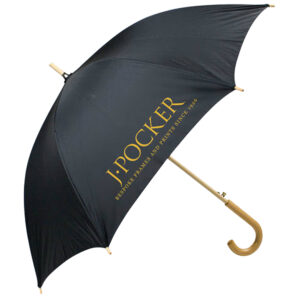
The client, a framing gallery in Manhattan, kept these Umbrellas in the closet of the gallery to hand out when a client came without an umbrella and left in the rain
There seem to be so many types of umbrellas -- what are the main differences and which is right for my needs?
It can feel overwhelming at first, but the distinctions are actually pretty straightforward once you know what to look for. The two primary categories are stick umbrellas and folding umbrellas, and everything else flows from there.
A stick umbrella -- sometimes called a straight umbrella -- has a fixed, full-length shaft that doesn't collapse. It's the classic golf umbrella silhouette, and it's the right choice when coverage and presence are the priority. Stick umbrellas tend to be larger, sturdier, and more dramatic as a branded item. They make a statement. The tradeoff is portability -- they don't fit in a bag or a briefcase, which limits how often they get carried and therefore how often they get seen.
Folding umbrellas collapse down into a compact form that fits in a purse, a laptop bag, or a coat pocket. They come in two-fold and three-fold configurations -- the more folds, the more compact the collapsed size, though a greater number of folds can also affect durability over time. Folding umbrellas are the everyday carry choice, which means they tend to accumulate more impressions simply because people actually have them on hand when the weather turns.
Within both categories, you'll encounter manual open and auto open (and sometimes auto open/auto close) mechanisms. A manual umbrella requires the user to push the canopy open by hand. Auto open deploys the canopy with the press of a button -- faster, more convenient, and consistently perceived as a more premium product. Auto open/auto close adds the ability to collapse the umbrella with the same button, which is a small luxury that recipients genuinely appreciate.
The right type depends on your audience, your budget, and whether you want something that travels everywhere or something that makes a big impression at a specific event. We're happy to help you think it through.
What should I look for in umbrella construction, and what does rib count actually mean?
Construction quality is what separates an umbrella that becomes a daily companion from one that inverts in the first gust and gets abandoned in a trash can -- which is not the brand impression anyone is going for. There are a few key construction elements worth understanding before you order.
The canopy is the fabric panel that does the actual work of keeping someone dry. Canopy material ranges from basic polyester to higher-end pongee, a tightly woven fabric with a slightly silkier hand that repels water more effectively and holds color more vibrantly. For branded umbrellas where imprint quality matters, pongee is worth the upgrade.
The ribs are the internal framework that supports the canopy and gives the umbrella its shape. This is where rib count becomes important. A standard umbrella typically has six ribs. An eight-rib umbrella offers noticeably better wind resistance and a fuller, rounder canopy profile -- it simply holds its shape better under pressure. Sixteen-rib construction, found on premium and golf umbrellas, is exceptionally sturdy and produces a beautifully symmetrical canopy that photographs and brands extremely well. More ribs generally means more durability and a more finished appearance, though it also affects price and weight.
The shaft and frame material -- typically steel, fiberglass, or aluminum -- also affects both weight and wind resistance. Fiberglass is particularly popular for higher-end umbrellas because it has a natural flex that allows the umbrella to give in the wind rather than snap.
Finally, the handle does more than people think. A comfortable, well-designed handle in rubber, wood, or leather wrapping affects how the umbrella feels to carry and significantly influences the overall perceived quality of the product. On a branded umbrella, it's one more opportunity to signal that you chose this thoughtfully.
How much canopy space do I actually have for branding, and what print options are available?
It can feel overwhelming at first, but the distinctions are actually pretty straightforward once you know what to look for. The two primary categories are stick umbrellas and folding umbrellas, and everything else flows from there.
A stick umbrella -- sometimes called a straight umbrella -- has a fixed, full-length shaft that doesn't collapse. It's the classic golf umbrella silhouette, and it's the right choice when coverage and presence are the priority. Stick umbrellas tend to be larger, sturdier, and more dramatic as a branded item. They make a statement. The tradeoff is portability -- they don't fit in a bag or a briefcase, which limits how often they get carried and therefore how often they get seen.
Folding umbrellas collapse down into a compact form that fits in a purse, a laptop bag, or a coat pocket. They come in two-fold and three-fold configurations -- the more folds, the more compact the collapsed size, though a greater number of folds can also affect durability over time. Folding umbrellas are the everyday carry choice, which means they tend to accumulate more impressions simply because people actually have them on hand when the weather turns.
Within both categories, you'll encounter manual open and auto open (and sometimes auto open/auto close) mechanisms. A manual umbrella requires the user to push the canopy open by hand. Auto open deploys the canopy with the press of a button -- faster, more convenient, and consistently perceived as a more premium product. Auto open/auto close adds the ability to collapse the umbrella with the same button, which is a small luxury that recipients genuinely appreciate.
The right type depends on your audience, your budget, and whether you want something that travels everywhere or something that makes a big impression at a specific event. We're happy to help you think it through.