
Chocolate Custom Molded
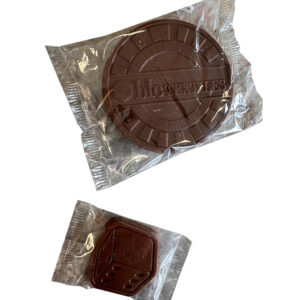
The client, a large linen manufacturer operating in the commercial laundry space, wanted somthing that would draw traffic to their booth at a major regional trade show. We continued the theme used for the pre-show mailers and of the booth design of "Don't gamble with your supply chain" by custom molding chocolate dice and molding a roulette wheels in milk chocolate dipped sugar cookies.
What exactly is custom molded chocolate, and what kinds of shapes and forms are possible?
Custom molded chocolate is exactly what it sounds like -- chocolate that is poured into a custom-designed mold to produce a finished piece in virtually any shape imaginable. But understanding what that actually means in practice opens up a creative universe that most people don't fully appreciate until they start exploring the possibilities.
The process begins with the mold itself. Stock molds are pre-existing shapes that can be ordered relatively quickly and at lower minimums -- common forms like rectangles, squares, circles, hearts, stars, and simple geometric shapes that work well as a canvas for a logo or a message pressed into the surface. Custom molds are fabricated specifically for a client and can replicate almost any three-dimensional form -- a company's logo rendered as a solid chocolate piece, a product replica, a building, a vehicle, an animal, a character, or any other shape that serves the brand story being told. Custom molds require more lead time and a higher investment but produce results that are genuinely one of a kind.
Within those categories, a few terms are worth understanding. Solid molded chocolate is a single piece poured entirely in chocolate -- dense, weighty, and impressive in the hand. Shell molded chocolate creates a hollow outer form that can be filled with ganache, caramel, nuts, other confections, or even small items -- a technique that allows for both a striking exterior and a surprise interior. Bas-relief molding produces a flat-backed piece with a raised three-dimensional design on the front surface -- the most common technique for logo chocolates and commemorative pieces, as it captures fine detail beautifully and presents cleanly in packaging.
Enrobing is a related process where a center -- a truffle, a cookie, a caramel, a piece of fruit -- is coated in a layer of chocolate rather than molded from scratch, producing a different aesthetic and texture profile. And chocolate bark offers a more freeform canvas where toppings, inclusions, and drizzled contrasting chocolates create a visually striking piece without a mold at all.
The range of what is possible is genuinely wide -- and the best starting point is a conversation about what you want the piece to communicate and who will be receiving it.
What types of chocolate are available, and does the quality of the chocolate actually matter for a branded piece?
It matters enormously -- and this is worth understanding before making any decisions about a custom chocolate program, because the chocolate itself is the experience the recipient has after the visual impression of the piece has worn off. A beautifully molded chocolate that tastes mediocre leaves a mediocre impression. A beautifully molded chocolate that tastes exceptional leaves an exceptional one. Your brand is associated with both outcomes equally.
The most important distinction in chocolate type is between real chocolate and compound chocolate. Real chocolate -- also called couverture chocolate -- contains cocoa butter as its fat source. Compound chocolate substitutes vegetable oils or palm fat for some or all of the cocoa butter. The difference is immediately perceptible in both taste and texture. Couverture melts at body temperature, which produces that characteristic smooth, clean melt-in-the-mouth quality that people associate with genuinely good chocolate. Compound chocolate melts differently, has a slightly waxy texture, and a flavor profile that most people recognize as less refined even if they can't articulate why.
For branded chocolate programs where the goal is to make a positive impression, couverture is almost always the right choice. The price difference is real but the quality difference is greater.
Within couverture chocolate, the main varieties each bring distinct characteristics. Dark chocolate is defined by its cocoa content -- typically expressed as a percentage, with higher percentages indicating more cocoa and less sugar. A 70% dark chocolate tastes very different from a 54% dark, and knowing your audience's preferences helps narrow the choice. Dark chocolate is also the most shelf-stable of the varieties, which matters for programs where the chocolate needs to travel or sit in inventory.
Milk chocolate contains added milk solids that produce a creamier, sweeter, more approachable flavor profile. It is the most universally popular choice for broad gifting programs where the audience is varied and the goal is maximum enjoyment across different palates.
White chocolate -- technically not chocolate at all in the traditional sense since it contains no cocoa solids, only cocoa butter, milk, and sugar -- has a sweet, creamy, vanilla-forward flavor that works beautifully as a contrasting element in multi-piece collections and as a base for colored chocolate work, since it takes cocoa butter colorants more readily than dark or milk varieties.
Ruby chocolate is a relatively recent addition to the chocolate family -- a naturally pink variety produced from a specific processing of ruby cocoa beans, with a fruity, slightly tart flavor profile that is entirely distinct from dark, milk, or white. It is visually striking and still novel enough to generate genuine surprise and conversation, which makes it a strong choice for programs where standing out is a priority.
Tempering is the process of heating and cooling chocolate to specific temperatures to stabilize the cocoa butter crystals, producing a finished piece with a glossy surface, a clean snap when broken, and the correct melt profile. Properly tempered chocolate is the mark of quality production -- improperly tempered chocolate blooms, developing a dull, streaky, or grayish surface that looks and feels less refined. It is worth asking about tempering practices when evaluating any chocolate supplier.
How do custom chocolates work as a corporate gift or branded giveaway, and what makes a chocolate program genuinely memorable?
Custom chocolate occupies a unique position in the corporate gifting world because it combines immediate sensory impact with an extremely high perceived value relative to its actual cost. Almost everyone loves chocolate. Almost everyone receives it with genuine pleasure. And a custom molded piece -- particularly one that is beautifully packaged and clearly made with care -- elevates what might otherwise be a simple food gift into something that feels like a genuine luxury.
The element that makes a chocolate program genuinely memorable rather than merely pleasant is the same element that elevates any gifting program: the sense that the piece was designed specifically for this occasion, this brand, and this recipient. A custom molded chocolate in the shape of your company's logo or product tells a story that a generic truffle assortment cannot. A chocolate piece designed around a conference theme, a product launch, or a milestone event feels commemorative rather than incidental. A piece that arrives in custom packaging -- a branded box, a ribbon in company colors, a window that allows the chocolate to be seen before it is opened -- communicates from the first moment that this was not an afterthought.
Flavor pairing is another dimension worth considering for programs that want to go beyond the standard offering. A dark chocolate piece infused with sea salt and caramel tells a different story than one flavored with espresso or raspberry or chili. Inclusions -- nuts, dried fruits, crispy pearls, or other elements folded into the chocolate or pressed into the surface -- add texture and visual interest. Multi-piece collections that offer recipients a curated selection of flavors and forms rather than a single piece elevate the unboxing experience considerably.
Shelf life is a practical consideration that is worth addressing early in any program planning conversation. Dark chocolate typically remains at its best for six months or more under proper storage conditions. Milk and white chocolate have slightly shorter windows. Filled pieces -- truffles, ganache centers, fresh cream fillings -- have meaningfully shorter shelf lives than solid or shell-molded pieces and require more careful attention to production timing and distribution logistics.
Dietary considerations have become increasingly important in corporate gifting programs and are worth factoring in from the start. Vegan chocolate -- made without any animal products including milk solids -- is increasingly available at quality levels that rival conventional couverture. Allergen-free production environments matter for recipients with nut, dairy, or gluten sensitivities. Kosher and halal certified chocolates are essential for certain audiences and events. Knowing your audience before finalizing a chocolate program ensures that the gift is genuinely inclusive rather than inadvertently exclusionary.
We love helping clients design chocolate programs that are as thoughtful as they are delicious. From the mold concept to the packaging to the flavor selection to the logistics of getting the right piece to the right person at the right time -- reach out for a consultation and let's build something genuinely worth savoring.